
Deep Work in Tech: Not the Holy Grail You Think It Is
A realistic look at Cal Newport's "Deep Work" and why this method might actually ruin a software engineer's workflow.
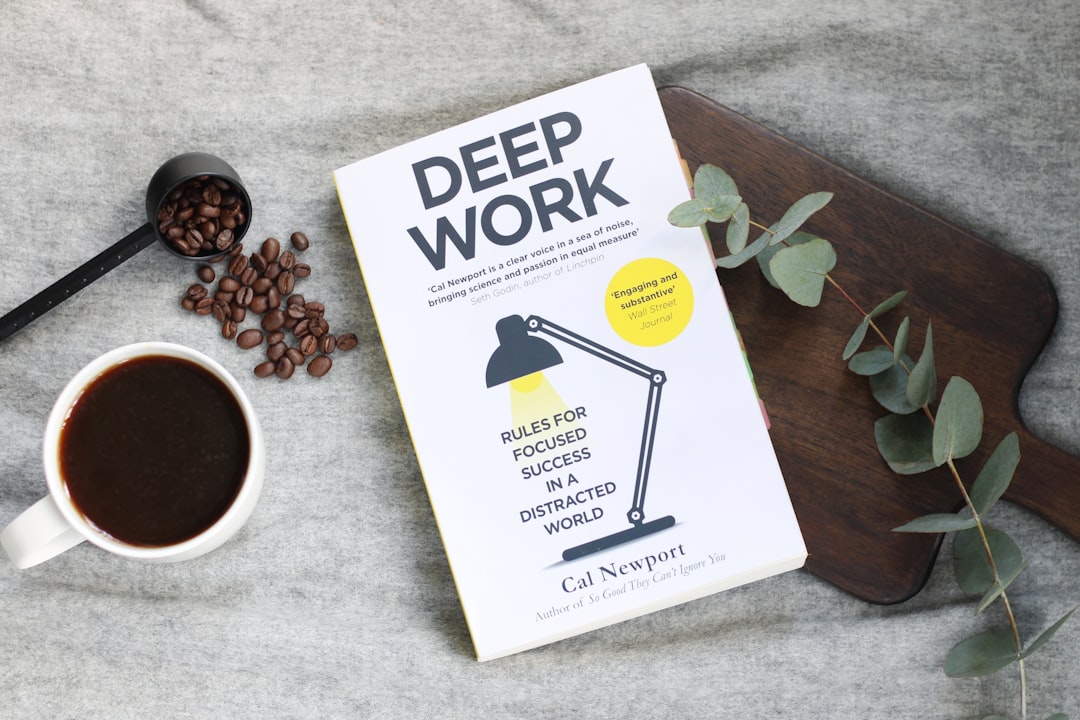
Late last year, I deleted Slack from my phone and blocked off 4 hours on my calendar every day just to focus on coding. The result? I almost got fired for slowing down the entire team’s progress.
Cal Newport’s book Deep Work has always been hailed in the tech world as a productivity bible. It promises a state of distraction-free work that helps you accomplish a massive amount of output. But when you apply this theory to the life of a real-world software engineer, things start to fall apart.
What is Deep Work, really?
Newport’s core concept revolves around completely eliminating distractions to push your cognitive limits to the max. He categorizes work into two types: Deep Work (high-value, cognitively demanding tasks) and Shallow Work (repetitive, low-value, logistical tasks).
Newport argues that emails, messages, and meetings are eroding our ability to focus. His advice is to cut Shallow Work to the bone to make space for Deep Work.
In theory, this sounds perfectly logical. But in practice, it’s a completely different story.
Why this theory conflicts with the Tech industry
The problem of the academic perspective
Cal Newport is a university professor. His job involves research and writing papers—an environment that tolerates someone disappearing for weeks to think.
Software engineers don’t live in that world. We work in Agile environments. We have daily standups, sprint reviews, and production bugs that need immediate attention. You can’t turn off your phone for 4 hours when the server is crashing.
The team communication blind spot
I used to think that disconnecting completely was the best way to boost productivity. But after I delayed the team for 3 days because I missed a crucial message about a database schema change, I realized that “shallow work” is actually the glue that holds a project together.
You can’t build a massive system if no one knows what you’re doing. Answering a colleague’s message or reviewing their code might feel like shallow work to you, but it’s a “blocker” for them. This is incredibly important, especially when you work independently. If you’ve read the post The Truth About Senior Burnout: Freelance or Indie?, you’ll understand how constant communication determines a project’s survival.
Theory vs. Reality
| Criteria | Newport’s Perspective | Tech Industry Reality | Notes |
|---|---|---|---|
| Email & Chat | The enemy of focus | A tool to resolve blockers | Cannot be eliminated, only batched |
| Blocked Time | 3 - 4 hours per session | Rarely more than 2 free hours | Meeting schedules are often fragmented |
| Work Value | Only coding/research has value | Code reviews and system design are equally valuable | Communication is part of the job |
How to apply Deep Work without getting fired
You can still leverage Newport’s mindset, but you have to tweak it to fit a real-world work environment.
- Shorten the timebox. Instead of blocking 4 hours, I use blocks of exactly 85 minutes. This is long enough to load the context of a difficult task, but short enough that I won’t miss urgent team issues.
- Batch minor tasks. Move from checking your phone 47 times mindlessly to 3 intentional checks per day. I specifically set my Slack check times for 9 AM, 1 PM, and 4 PM.
- Keep offline documentation. When you need to focus, disconnect, but still document your train of thought to sync with the team later. I usually organize my personal notes quite meticulously. You can see how I do this in the post Obsidian and AI: Is it actually good for PKM?.
Slow Productivity — Cal Newport
Check price on Shopee →* Affiliate link — the price stays the same for you
Link to buy Deep Work (Read for the mindset, don’t follow it 100%)
FAQ
Does this method work for Senior Devs?
The higher you climb, the fewer opportunities you have for Deep Work. Senior Devs spend most of their time reviewing code, designing architecture, and unblocking Juniors. You have to accept that your schedule will be fragmented.
How do I decline useless meetings?
Don’t just say no. Request an agenda before joining. If the agenda doesn’t require a decision from you, ask for permission to skip and read the meeting notes later.
Should I use website blocking tools?
Yes. Environment dictates behavior. I still use tools to block social media during my 85-minute blocks. Relying solely on willpower rarely yields good results.
Conclusion
Cal Newport’s book provides an excellent mindset regarding the value of focus. However, it isn’t a manual that applies to every profession.
For a software engineer, your value doesn’t just lie in the lines of code you write in isolation. It also lies in how you interact, support your team, and keep the entire machine running smoothly. Use Deep Work as a sharp tool when you need to solve hard problems, but don’t let it become a religion that alienates you from your colleagues.