
The Dead Men Who Own Your Land
Uncover how ancient civilizations used graveyards not for mourning, but as eternal property deeds to control the living.
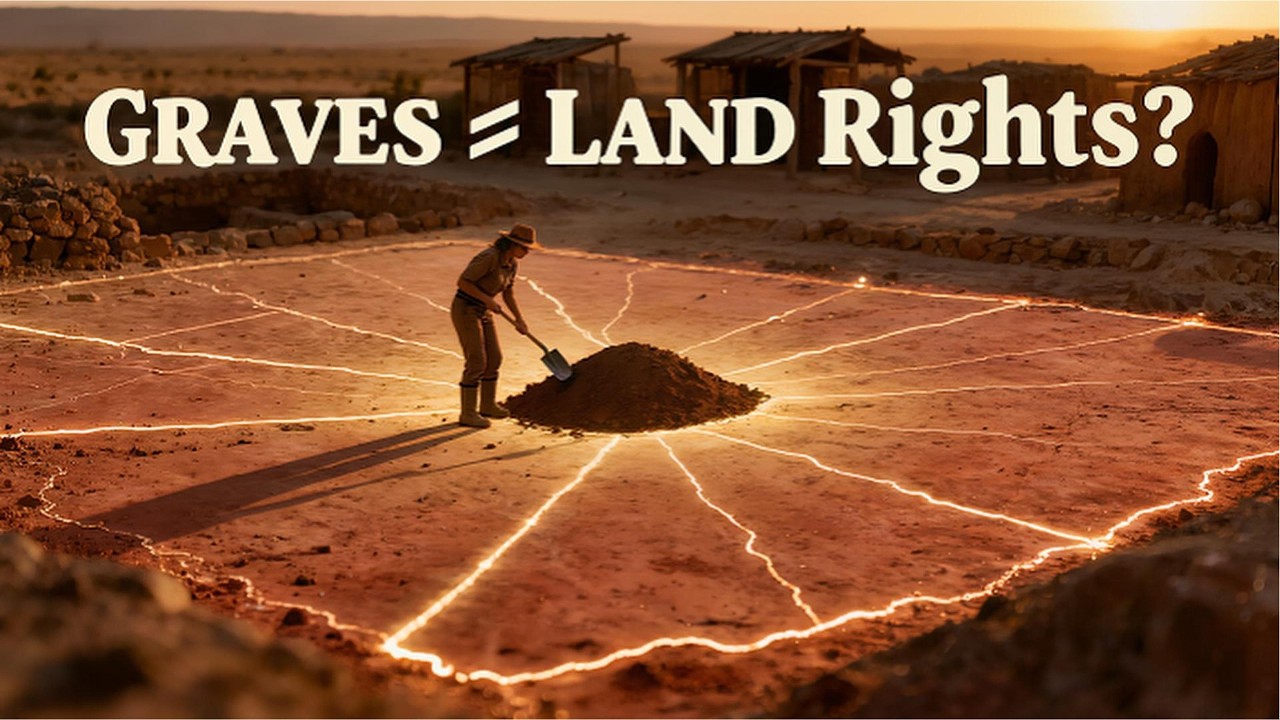
The Ultimate Property Deed
What most people think of as a quiet place of mourning is actually a brutally effective legal weapon. It is 1370. The Hongwu Emperor of China is standing over a map, marking off exactly 120 square kilometers of prime valley real estate. He is not building a fortress or a new capital. He is building a graveyard.
By placing his ancestors in that specific valley, he legally locks that land away from every living citizen for over 600 years. You have heard of ancient kings building massive tombs to secure their place in the afterlife. But the reality is much more practical.
Graveyards are not just resting places. They are the original property deeds.
A body in the ground was a permanent anchor for the living. It was a fleshy, decaying flag planted in the earth. If your grandfather was in the soil, the soil belonged to you.
The Geometry of Power
Consider ancient Rome. Families buried their dead along the Via Appia, the empire’s most valuable trade route. They did not do this just to remember their loved ones. They did it to physically mark their territory.
A grand tomb on a busy road was a giant billboard. It told every passing merchant exactly who controlled that stretch of the local economy.
Look at medieval Europe. The church did not just control souls. It controlled the dirt. Bishops decided exactly who got buried within a precise 30-meter radius of the cathedral walls.
This inner circle was not just holy ground. It was a physical zoning map for the medieval elite. If a noble family secured a plot exactly 5 meters from the altar, they secured untouchable political influence for centuries.
The Prehistoric Security Fence
This strategy goes back much further than kings and popes. Around 4000 BC, early farming communities in Western Europe started building massive stone megaliths.
These structures contained stones weighing exactly 40 tons. Dragging them took incredible effort and organization. Why invest all that energy just to bury a few people?
Because these tombs sat directly on the borders of highly contested grazing land. They were permanent warning signs to rival tribes.
A massive tomb sent a clear message. It said that a tribe had been there for generations, and they had the massive manpower required to build a fortress of stone. Death was the ultimate border patrol.
Modern Ghost Landlords
We still play by these exact same rules today. In cities like London and New York, the dead occupy some of the most expensive real estate on the planet.
Highgate Cemetery in London holds 170,000 bodies across 37 acres of premium urban land. The living are crammed into tiny, overpriced apartments. Meanwhile, the dead stretch out in sprawling green parks that cannot be legally touched by developers.
The placement of a tombstone is a civilization’s way of saying “mine”. It is a land claim that outlasts empires, governments, and even modern currencies.
The dead are the only landlords who never sell, never move, and never pay taxes. When you walk past a graveyard, you are not just looking at history. You are looking at a map of power that is still actively dictating the shape of our world.
Who really owns the ground beneath your feet?