
The Ice Volcano That Armed A Continent
Hidden beneath Canadian ice lies a dormant giant that secretly fueled an ancient weapons empire.
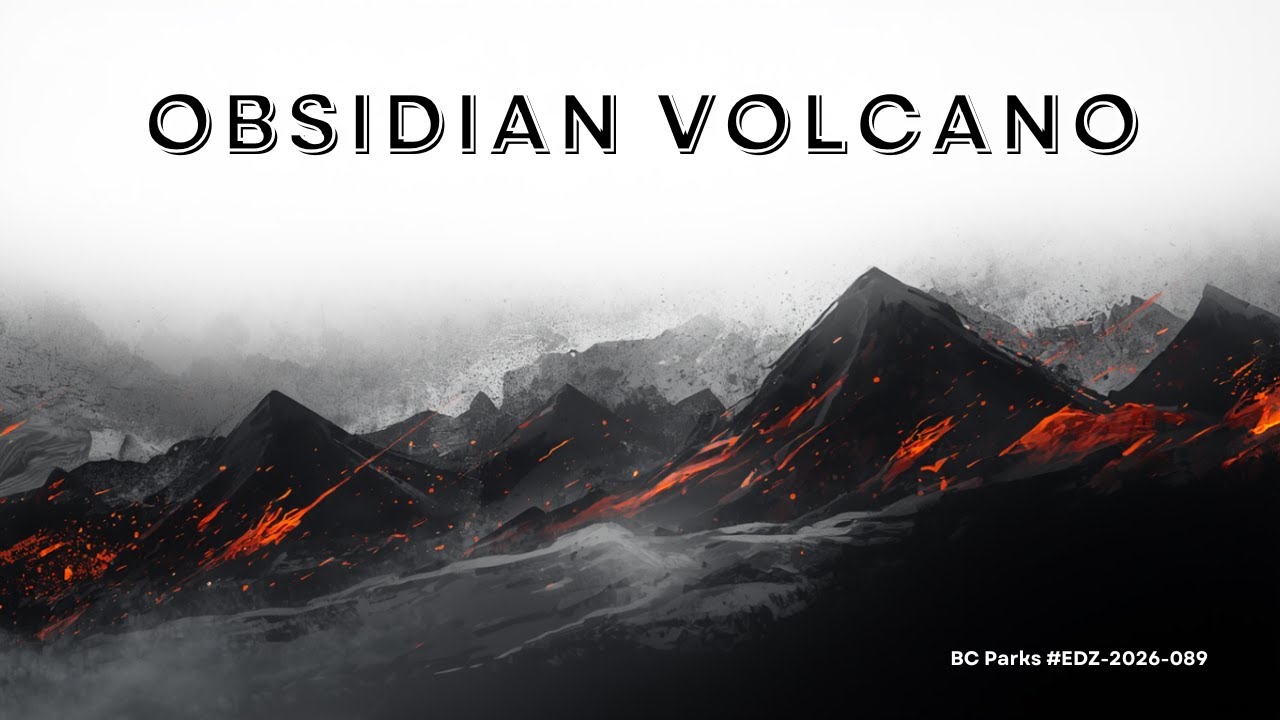
The Frozen Forge
What most people think of when they imagine an ancient weapons factory is a fiery forge, not a frozen Canadian mountain. Deep in remote British Columbia, Mount Edziza sits dormant under a massive ice cap. Yet for ten millennia, this freezing volcano was the continent’s largest supplier of ultra-lethal black glass.
Ancient hunters traveled hundreds of miles through brutal terrain just to harvest its volcanic obsidian. Honestly, I had to re-read the archeological reports three times before I believed a mountain of ice could produce the sharpest blades on Earth. The glass cooled so perfectly under the ancient glaciers that it created edges capable of splitting human cells.
We are talking about blades with edges as thin as 3 nanometers. That is far sharper than the finest surgical steel used in hospitals today. When the lava met the glacial ice thousands of years ago, it flash-cooled without forming any crystalline structure.
This lack of crystals means the glass breaks in a highly predictable, incredibly sharp fracture pattern. It allowed early toolmakers to chip away flakes with pinpoint accuracy to craft the perfect hunting spear.
A Continental Trade Empire
You have heard of the Silk Road. But the obsidian trails leading out of Mount Edziza were just as vital to the survival of early North Americans. This was not just a local hunting spot for nearby tribes.
Archaeologists have found Edziza obsidian scattered across a truly massive area. The distinct chemical signature of this specific volcano’s glass has been identified exactly 2,400 kilometers away in Alaska. It was the ancient equivalent of a defense contractor supplying an entire hemisphere.
The Tahltan Nation and their ancestors controlled access to this invaluable resource. Transporting these fragile stones was an incredibly demanding task. Indigenous traders carried heavy packs of raw glass on foot through dense forests and over treacherous mountain passes.
They navigated rushing rivers and faced down apex predators like grizzly bears. The obsidian was traded from village to village, passing through countless hands before reaching its final destination. It was the absolute currency of the prehistoric north.
Secrets Emerging From the Ice
Today, Mount Edziza is incredibly difficult to reach. There are no roads leading to the volcanic plateau. You have to charter a bush plane or hike for over a week through untouched wilderness just to see the base of the caldera.
But the warming climate is starting to reveal what the mountain has hidden for so long. As the alpine ice patches retreat, they are exposing perfectly preserved artifacts. Hunters thousands of years ago dropped their tools in the snow, and the ice kept them frozen in time.
Researchers recently discovered a 2,000-year-old obsidian blade still attached to its wooden handle. It was bound tightly with ancient animal sinew that had not rotted away. The temperature on the plateau averages around minus 4 degrees Celsius for most of the year, acting as a giant outdoor freezer.
Finding organic material like wood and sinew from that era is incredibly rare. It paints a vivid picture of the hunters who braved the freezing winds to arm their families.
The Sleeping Giant
Edziza is not dead. It is merely sleeping under its heavy blanket of white. The last major eruption occurred roughly 1,000 years ago, a mere blink of an eye in geological terms.
Deep beneath the ice and basalt rock, magma still bubbles and shifts. The mountain that armed a continent could easily wake up again. If it does, the interaction between red-hot lava and millions of tons of glacial ice will create an explosive steam reaction visible from space.
For now, the mountain keeps its silent watch over the northern valleys. It makes you wonder about the footprints we leave behind in the snow. Thousands of years from now, when the ice shifts again, what modern tools of ours will the mountain swallow up and preserve for the next civilization to find?