
The Secret Leap of the First Cosmonaut
Yuri Gagarin made history as the first in space, but his landing was a secret. He didn't land in his capsule. Why?
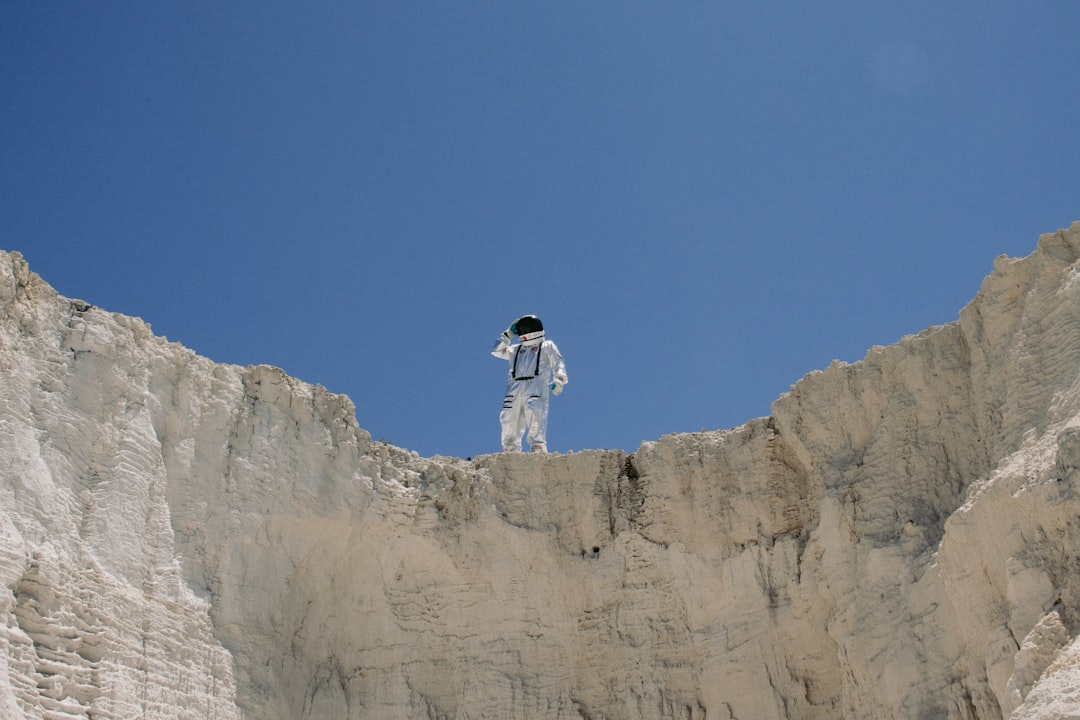
Actually, the first human in space, Yuri Gagarin, didn’t land inside his spacecraft. For over a decade, the Soviet Union carefully concealed a crucial detail about his historic 1961 flight: Gagarin ejected from his Vostok 1 capsule at an altitude of 7 kilometers and parachuted to Earth separately. This wasn’t a malfunction; it was by design.
The official narrative, spun for international recognition and record-keeping, stated that Gagarin landed safely inside Vostok 1. This carefully crafted falsehood was necessary to comply with FAI (Fédération Aéronautique Internationale) rules, which then stipulated that a pilot must land with their craft for a flight to be fully recognized as a spaceflight.
But the truth was far more complex, and frankly, far more dangerous. The Vostok capsule, while capable of carrying a human into orbit, was not designed for a safe human landing. Its descent module, a sphere weighing over two tons, would hit the ground with the force of a small meteorite.
A human inside would not survive that impact. Think about it: a metal sphere, hurtling through the atmosphere, then slamming into the Earth. It’s a miracle it could even get someone into space, let alone back down in one piece.
So, Soviet engineers devised an ingenious, if terrifying, solution. After re-entry, once the capsule had slowed sufficiently, Gagarin would be ejected, seat and all. He would then free-fall for a period, before deploying his personal parachute and drifting to Earth like any other paratrooper.
Imagine the courage. To be the first human to ever leave Earth’s atmosphere, to witness the curvature of our planet, and then, upon returning, to be flung out of your craft miles above the ground, trusting a parachute to bring you home. It’s a testament to Gagarin’s incredible bravery and the desperate measures of early space exploration.
The secrecy wasn’t just about record books. It was about national pride, Cold War one-upmanship, and controlling the narrative of Soviet technological prowess. Admitting that their “pioneering” spacecraft couldn’t safely land its pilot might have tarnished the glow of their monumental achievement.
It wasn’t until 1972, more than a decade after the flight, that the truth began to emerge. The Soviets themselves started to reveal details, often through memoirs and less official channels, that confirmed the ejection. The space race was over, and perhaps the need for such stringent secrecy had lessened.
This detail changes how we view that iconic flight. It wasn’t just a journey into space; it was a dual descent, a synchronized ballet of man and machine, each completing its part of the journey separately. Gagarin’s individual parachute landing, unheralded for so long, adds another layer to his legendary status.
What other secrets do you think are still hidden in the annals of space exploration, waiting to be revealed?