
Why the Concorde Really Vanished
Everyone blames a tragic crash for ending supersonic passenger travel, but the real culprit was a quiet financial disaster hiding in plain sight.
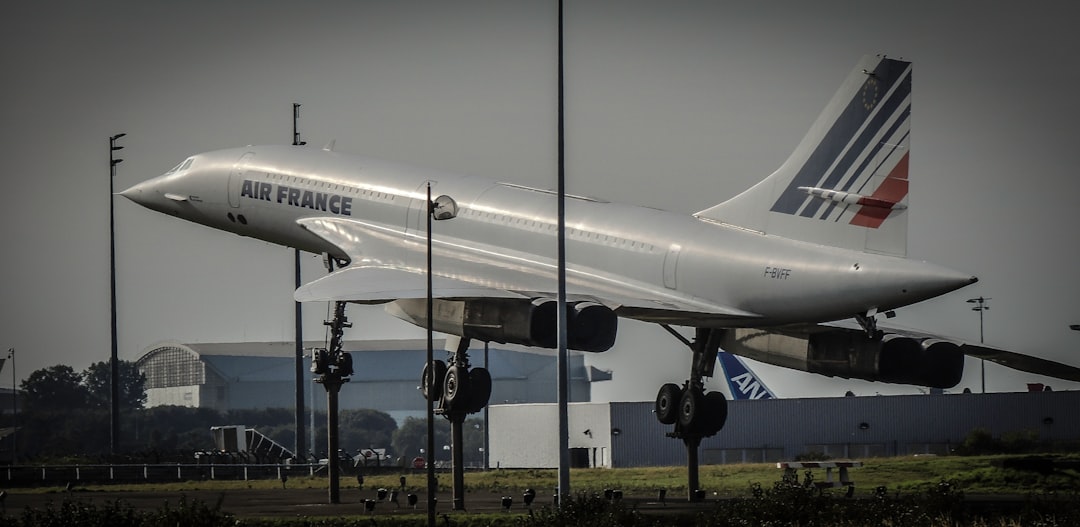
The True Assassin
What most people believe is that a fiery crash on July 25, 2000, killed the Concorde, but the real assassin struck years earlier.
It is a warm summer afternoon in Paris. A tragic plume of fire trails behind Air France Flight 4590 as it struggles into the sky, travelling at a desperate 328 km/h. That crash was a horrific event. Yet the supersonic jet was already doomed by its own design.
The true killer was surprisingly physical. At supersonic speeds, extreme friction heat caused the aircraft’s skin to stretch by exactly 12.7 centimeters. This thermal expansion created a cascade of structural nightmares that quietly bled the airlines dry.
A Marvel Built on Shaky Ground
You have probably seen photos of its sleek delta wing and drooping nose. The Concorde was an absolute masterpiece of mid-century ambition.
But the physics required to push a passenger tube through the air at Mach 2.04 demanded heavy sacrifices. The biggest sacrifice was fuel efficiency. The Concorde burned an astonishing 25,629 liters of aviation fuel every single hour.
Just taxiing from the terminal to the runway consumed roughly 2,000 liters. When oil prices spiked in the 1970s, the operating costs became entirely unsustainable.
Just as a 75-cent rubber ring downed a spaceship, the Concorde was ultimately defeated by simple physical realities and basic economics. It was a machine designed for a world of cheap fuel that ceased to exist.
The Invisible Wall of Sound
Then came the noise problem. Breaking the sound barrier is not a quiet affair.
Flying at supersonic speeds produces a continuous shockwave that drags along the ground behind the aircraft. This sonic boom was powerful enough to shatter glass and crack plaster in homes below.
Because of this deafening disruption, the United States and other nations banned the jet from flying supersonic over land. The Concorde was suddenly restricted to ocean crossings. This single regulatory wall destroyed its global market potential overnight.
The Maintenance Nightmare
The engineering required to survive Mach 2 created bizarre daily challenges. Remember that 12.7 centimeters of thermal expansion? The plane literally grew during flight.
The floor panels in the cabin would physically shift. Flight engineers had a running joke where they would place their hats in a gap in the console before takeoff. Mid-flight, that gap would close entirely, crushing the hat.
This constant stretching and shrinking took a massive toll on the airframe. Minor miscalculations in engineering often have massive consequences. We see this often in history, like when the bridge that missed by half a meter became a costly public embarrassment.
For the Concorde, this extreme operating environment meant astronomical upkeep. It required exactly 18 hours of intensive maintenance for every single hour of flight time. No commercial airline could sustain that ratio.
The Final Nail in the Coffin
By the late 1990s, the world had fundamentally changed. The internet and digital communication were rapidly connecting the globe.
Before the digital era, business executives needed to be in New York or London physically to sign papers. By 2003, paying 12,000 dollars for a ticket just to save three hours of travel time no longer made sense. A fax machine or an email could cross the Atlantic in seconds for pennies.
The crash in 2000 was merely the final excuse needed to ground an already failing project.
We look back at the Concorde as a peak in human aviation. But are we actually mourning a technological triumph, or just the romantic idea of a future that never made economic sense?