
5 Power Prompts to 2X Marketing Productivity (Prompt Engineering)
Master official OpenAI techniques like Persona Adoption, Few-Shot, and Chain-of-Thought to optimize your workflow.
The Art of Persuasion: Optimizing ChatGPT for Marketing Workflows
Article Info:
- Date: February 25, 2026
- Author: Andrew (The Soul Chapter)
- References:
- OpenAI Prompt Engineering Guide (v2026)
- HubSpot State of Marketing Report
Summary
The gap between “average” and “expert” LLM users is widening. While 80% of marketers only use ChatGPT for basic drafting, only the top 5% truly apply “Prompt Engineering” principles to create high-converting assets. This article decodes 5 algorithmic mindsets to optimize marketing, based on official OpenAI best practices regarding Persona Adoption, Few-Shot Prompting, and Chain-of-Thought reasoning.
📺 Watch the Detailed Video Tutorial: To get a better visualization of how to implement these techniques directly in ChatGPT, you can watch my tutorial video here: Watch Video On YouTube: 5 “God-Tier” Prompts to Help Marketers 2X Productivity
Part 1: The Problem with “Zero-Shot” (Zero Context)
Most user prompts are “Zero-Shot”—meaning they completely lack context or examples.
- User Error: “Write me a sales email.”
- Technical Flaw: The model will default to returning a result based on the average probability distribution of its training data, resulting in generic, cliché, spam-like content.
- Solution: We must shift to a “Few-Shot” mindset, providing the model with high-quality examples of the desired outcome before asking it to generate content.
Part 2: Framework 1 - Persona “Deep Dive” (Psychological Profiling)
Principle: Behavioral Priming. According to OpenAI documentation, the tactic of “asking the model to adopt a persona” helps narrow the neural network’s search space into a specific field of expertise. Prompt Structure:
- Role: Expert in Consumer Behavioral Psychology (PhD Level).
- Task: Deeply analyze the target audience.
- Context: Product = [Insert product name].
- Output Requirement: A table listing 3 customer personas (Avatars) with “Secret Pain Points” (fears they don’t dare speak aloud) and “Buying Triggers.”
- Why it works: It forces the model to simulate the reasoning flow of an expert instead of guessing like a generalist “know-it-all.”
Part 3: Framework 2 - The Ogilvy Headline Matrix (Chain-of-Thought)
Principle: Chain-of-Thought (CoT) Reasoning. Instead of jumping straight to the final result, CoT requires the model to “explain its thinking” first. Strategy: Don’t just force it to write 10 headlines immediately. Instead, ask the model to:
- Analyze the 3 greatest desires of the customer.
- Review the principles of the “Curiosity Gap” in viral theory.
- Then generate 10 headlines based on the steps above. Result: Headlines that are mathematically optimized for Click-Through Rate (CTR) rather than hollow, pun-filled slogans.
Part 4: Framework 3 - Value-Based Cold Outreach (Few-Shot)
Principle: In-Context Learning (Few-Shot). Technique: Provide the model with “Gold Standards.”
- Input: “Here are 3 successful cold emails I’ve written that achieved a 20% response rate: [Example A], [Example B], [Example C].”
- Task: “Analyze the tone, structure, and brevity of the examples above. Now, write a new email for [Potential Client] using this exact style.”
- Mechanism: The model will mimic the syntactic structure and tonal nuances of your sample data, bypassing the default “robotic marketing” voice.
Part 5: Framework 4 - A Content Calendar in 30 Seconds (Delimiters & Formatting)
Principle: Output Structuring. LLMs work most effectively when constrained by strict formats. Prompt: “Act as a Social Media Strategist. Create a 7-day posting schedule. Constraints:
- Ratio: 40% Educational, 40% Entertainment, 20% Sales.
- Format: Markdown Table.
- Columns: [Day] | [Hook] | [Visual Idea] | [Platform].
- Tone: Witty, Concise.” This prompt saves you hours of manual planning by imposing a strategic content ratio.
Part 6: Framework 5 - Leveraging the Competition (Sentiment Analysis)
Principle: Sentiment Analysis & Summarization. Workflow:
- Scrape 20 negative reviews (1-2 stars) from a competitor’s product page.
- Paste them into ChatGPT/Gemini.
- Prompt: “Perform a sentiment analysis on these reviews. Identify the 3 most recurring complaints (Market Gaps). Write a positioning statement for MY product highlighting exactly how we solve what the competitor is failing at.” Strategic Value: Turn your competitor’s weaknesses into your Unique Selling Proposition (USP) without spending money on expensive market research.
Conclusion
Prompt Engineering isn’t about “magic spells.” It’s about understanding how Large Language Models (LLMs) process context. By applying System Roles, Chain-of-Thought, and Few-Shot examples, marketers can transform ChatGPT from a simple text generator into a true revenue-generating engine.
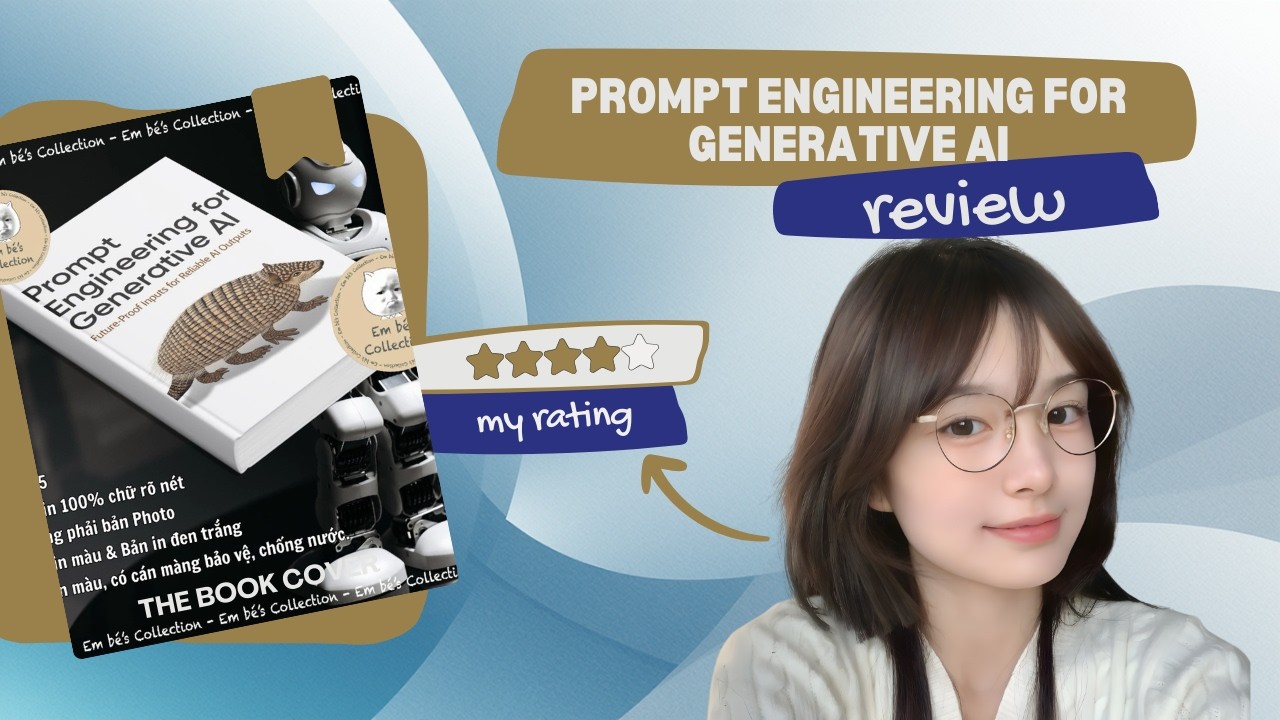
Fundamental Resource: Prompt Engineering for Generative AI
To truly master Prompt Engineering from the ground up (Deep Dive), you can refer to the book “Prompt Engineering for Generative AI”. This book helps you clearly understand technical parameters (like Temperature, Top-P) and in-depth models rather than just surface-level tips.