
Slow Productivity: Maintaining the Pace Across 3 Channels Without Burnout
How to apply Cal Newport's Slow Productivity to work less while maintaining an effective content system.
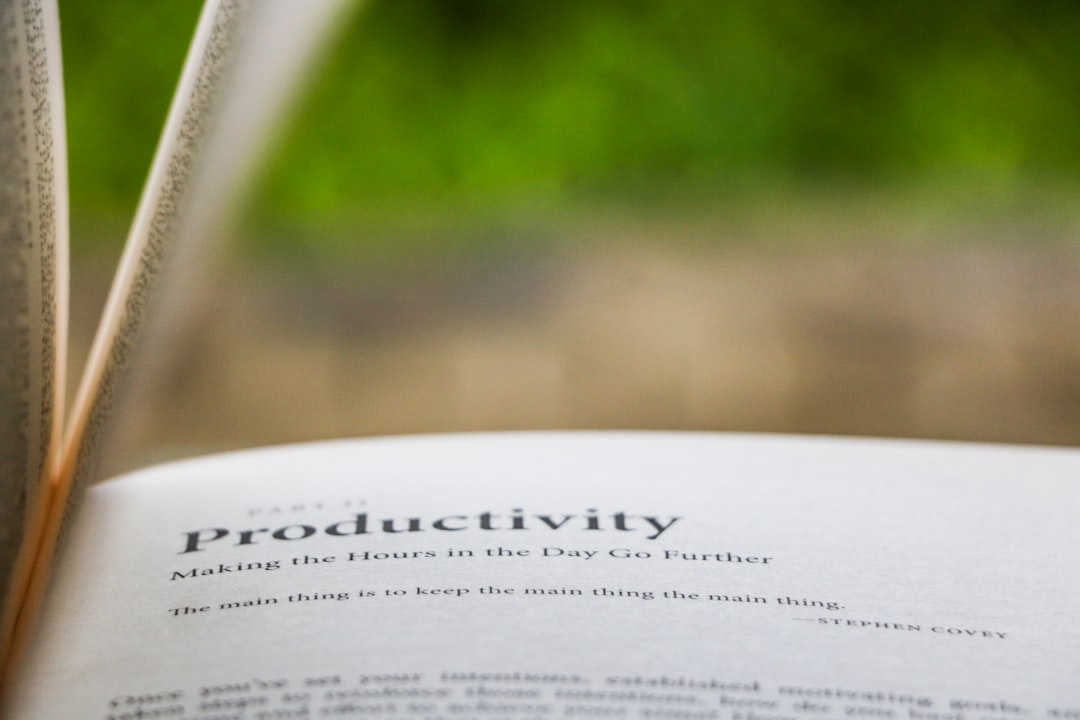
If you’re managing a blog, a video channel, and an email newsletter all at once, there are surely days when you just want to slam your laptop shut. I recently read Slow Productivity by Cal Newport and realized that the reason we burn out isn’t due to the raw volume of work, but rather the forced pace.
What is pseudo-productivity, really?
The core issue for today’s knowledge workers is getting trapped in “pseudo-productivity.” This concept refers to using visible activities—like replying to Slack messages immediately or constant progress reporting—as a metric of competence instead of the final result.
Released in 2024, this book serves as a direct answer to the wave of post-remote-work burnout. Instead of counting hours online, the author proposes a new operating system focused on meaningful value.
Principle 1: Do fewer things
Reduce parallel project load
Taking on dozens of tasks at once only creates massive context-switching costs. According to information from Cal Newport’s website, reducing the number of active projects is the first step toward regaining focus.
If you are building a 1-person 3-channel system: operational reality daily, you cannot force yourself to write code, film a video, and script a podcast all in the same morning. Batch these tasks and finish them one by one.
Principle 2: Work at a natural pace
Embrace seasonality
The human body is not a 24/7 server. There will be peak seasons where you are incredibly productive, perhaps aided by asking Do AI coding tools really help you code faster? like Cursor or Windsurf. But there must also be slow seasons to allow the brain to process information.
Don’t try to maintain a perfectly green posting calendar year-round. Forcing yourself to be creative according to a rigid daily KPI is the shortest path to running out of ideas.
Principle 3: Obsess over quality
The final result is what lasts
Quality requires incubation time. Instead of releasing a superficial article every week, you might spend an entire month diving deep into a difficult technical topic. Audiences will remember you for truly excellent work, not for the fact that you posted consistently every Tuesday.
Slow Productivity - Cal Newport
Check price on Tiki →* Affiliate link - price remains the same for you
The specific impact on follower counts when reducing posting frequency is something I don’t have precise data on at scale yet. However, reader loyalty toward high-quality content is something that becomes visible almost immediately.
Comparing two work ideologies
| Criteria | Pseudo-productivity | Slow Productivity | Notes |
|---|---|---|---|
| Metric | Visible activity | High-quality results | Slow Productivity prioritizes output |
| Pace | Constant, steady stress | Peak seasons and rest seasons | Fits human physiology |
| Focus | Number of tasks completed | Number of tasks eliminated | Optimizes for focus |
How to apply this to a content system
- Limit the number of active drafts. Keep a maximum of 3 ideas on your “in-progress” list.
- Accept that one channel might not have new content for several weeks so you can concentrate efforts on another.
- Set fixed rest periods. Close your laptop on weekends and don’t check analytics.
- Batch administrative tasks like replying to comments or sending emails into a single time slot per day.
FAQ
Does this method work for 9-to-5 office workers?
Not necessarily. Slow Productivity is best suited for knowledge workers who control their own schedules, freelancers, or senior developers. Those working fixed shifts or rigid processes will find it very difficult to apply the principle of natural pace.
Will the algorithm penalize me for posting less?
Initial impressions might drop. However, quality content brings longer watch times and higher retention rates. From there, the algorithm will automatically redistribute your posts.
Does AI make it easier to apply Slow Productivity?
Models like Claude Sonnet 4.6 or Gemini 3.1 Pro help you handle repetitive tasks very quickly. You should use that saved time to invest in core quality, rather than stuffing more work into your empty schedule.
Conclusion
Chasing content volume across multiple platforms is like trying to fill a bottomless pit. I’ve realized that slowing down isn’t laziness; it’s a conscious choice to protect a creator’s most important asset—focus and mental health. You can only go the distance if you know when to pause.