
The 14-Inch Drill That Swallowed A Lake
A tiny calculation mistake unleashed a monstrous vortex that sucked barges, trees, and an entire lake into the earth.
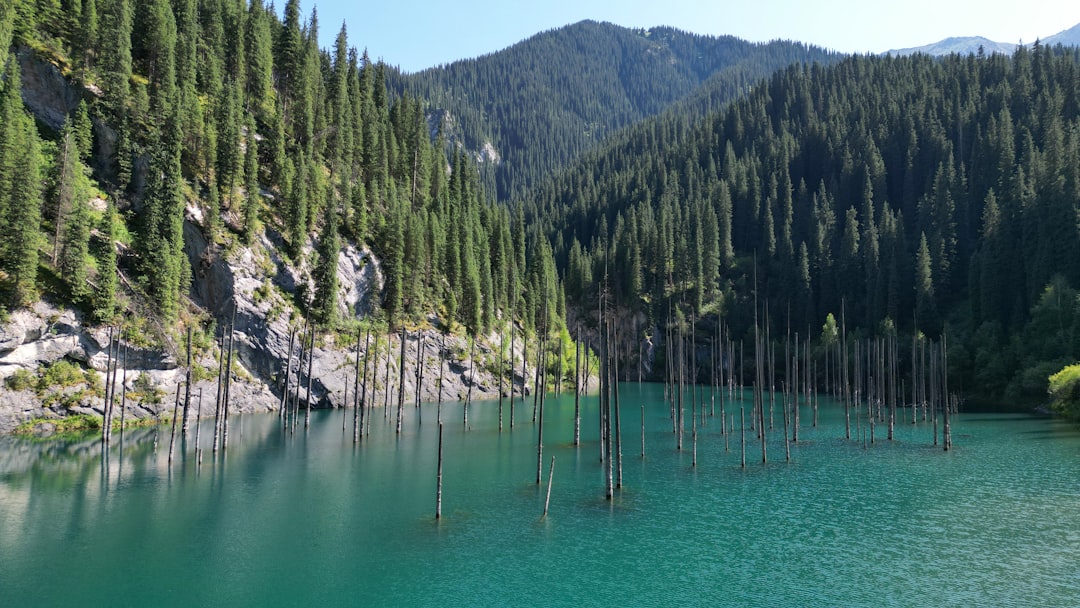
What most people think of as a slow geological shift happened in a matter of hours when an entire freshwater lake was literally sucked down the drain. On a quiet morning in Louisiana, a towering oil rig, 11 barges, a tugboat, and 65 acres of dense forest vanished into the earth.
The culprit was not an earthquake or a sinkhole. It was a standard 14-inch drill bit.
Honestly, I had to re-read the official incident reports three times before I believed a tool that small could trigger an apocalyptic event. But the destruction at Lake Peigneur was painfully real.
A Disastrous Miscalculation
In November 1980, Lake Peigneur was a peaceful, shallow body of water. It was only about 3 meters deep. Fishermen loved it, and locals enjoyed the serene environment.
But beneath the lake surface, two completely different operations were taking place. An oil company was drilling exploratory wells from a floating rig. Directly below them, a massive salt mine operated with huge subterranean caverns.
The drilling crew was aiming for a specific spot beneath the lake bed. Unfortunately, they made a critical error in their coordinate mapping system. We often see how tiny math errors cause massive failures, like A $125M Math Error That Doomed a Mission in space exploration. Here, the miscalculation was earthly but equally destructive.
The 14-inch drill bit pierced the roof of the active salt mine. The crew heard a loud pop. Then, the drill pipe began to sink rapidly.
The Giant Plughole
Realizing something was terribly wrong, the rig crew evacuated immediately. Within an hour, the million-dollar drilling platform disappeared completely beneath the water.
Water rushed into the salt mine below. Because salt dissolves rapidly in water, the tiny 14-inch hole rapidly expanded. It grew from a small leak into a monstrous, churning vortex.
The whirlpool reached a terrifying speed of exactly 56 km/h. It acted like a giant vacuum cleaner, pulling down everything on the surface. Trees, mud, and large industrial barges were sucked into the dark abyss.
The sheer force of the water rushing into the caverns displaced the air inside the mine. This created massive geysers of compressed air and mud that shot 120 meters into the sky.
Reversing The Flow Of Nature
The most mind-bending part of the Lake Peigneur disaster is what happened to the local geography. The lake was connected to the Gulf of Mexico by a small waterway called the Delcambre Canal. As the lake drained into the mine, the water level dropped so fast that the canal actually reversed its flow.
Saltwater from the Gulf rushed backwards into the draining lake. This created a temporary 50-meter waterfall, the tallest ever recorded in the state of Louisiana. The massive influx of ocean water meant the freshwater ecosystem was instantly destroyed.
A Permanent Transformation
When the water pressure finally equalized, the lake was completely transformed. Nine of the eleven sunken barges popped back up to the surface like corks. The landscape was scarred, and the local wildlife had to adapt to a completely new environment.
Just as a tiny oversight led to The 75-Cent Flaw NASA Ignored, a small mapping mistake here changed the physical world forever.
The Miracle Of Survival
Despite the apocalyptic scale of the destruction, the human outcome was miraculous. All 55 miners working underground managed to escape. They used slow-moving elevators to reach the surface just as the violent waters roared through the tunnels behind them.
The rig crew also made it out safely. Even a local fisherman who was caught in the canal managed to tie his small boat to a tree and wait out the terrifying chaos.
Today, Lake Peigneur is a completely different body of water. It is much deeper, filled with marine life, and permanently altered by a simple human error.
You have to wonder how many other massive, invisible structures are resting right beneath our feet. Are we just one tiny miscalculation away from the ground opening up again?