
The 1970s Secret Keeping NASA Alive
Discover why humanity's most advanced space missions rely on ancient computer chips to survive the brutal radiation of deep space.
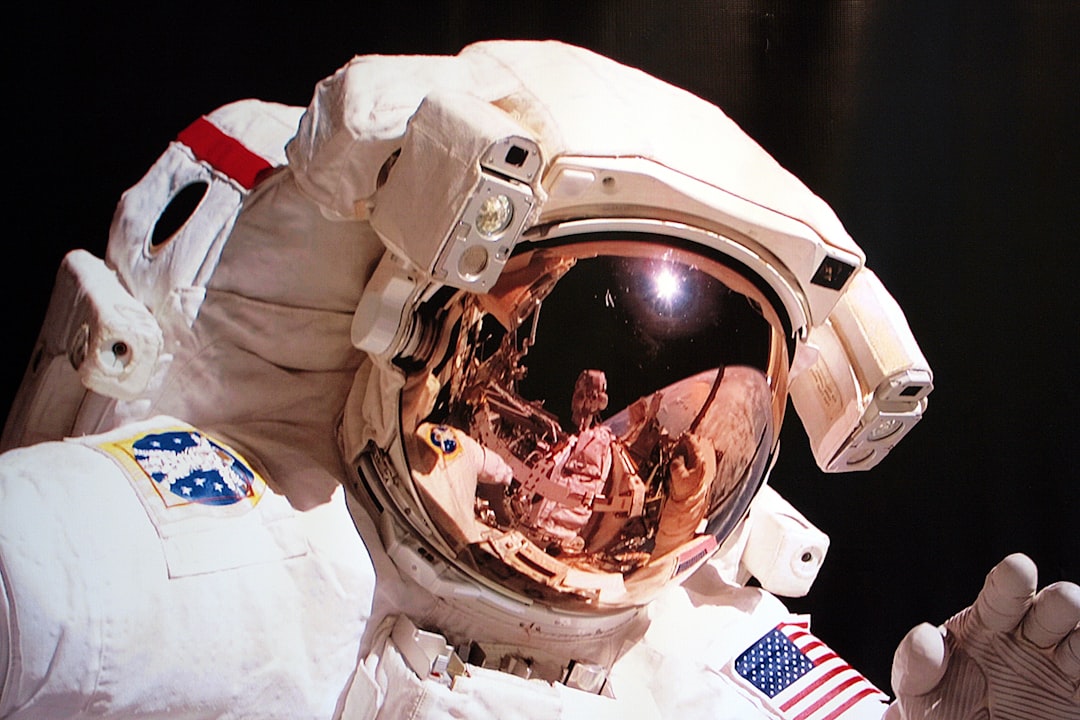
The Ancient Brains of Deep Space
What most people don’t realize is that the billion-dollar spacecraft currently hunting for alien life runs on the exact same computer chip that powered your grandparents’ clunky desktop in 1979. Your pocket-sized smartphone is literally millions of times faster than the computer driving the Mars Perseverance rover.
You might assume the world’s premier space agency would want the fastest, most advanced silicon on the market. But wait — if that’s true, why does every deep space probe launch with processors that belong in a museum?
Honestly, when I first saw the schematics for the Orion spacecraft, I thought someone had uploaded the wrong file. It relies on processors from 2002, which themselves are just rugged versions of chips from the late 1990s.
Missions traveling even further into the void use even older architecture. The legendary Galileo mission to Jupiter ran on RCA 1802 chips, a processor designed in 1974.
The Invisible Assassin
The problem isn’t the hardware itself. The real issue is the brutal environment where we are sending it.
Space is a chaotic, invisible shooting gallery of high-energy particles and cosmic rays. Down here on Earth, our magnetic field acts like a giant protective shield. It effortlessly deflects the worst of this endless cosmic bombardment.
But once you leave low Earth orbit, that shield completely vanishes. You are suddenly exposed to the raw, violent radiation of the solar system.
Just like how a single software error triggered the 45-minute glitch that cost an empire, a single cosmic ray can spell instant doom for a spacecraft.
When a high-energy particle strikes a computer chip, it can cause what aerospace engineers call a “single-event upset.” It literally flips a digital zero to a one. In a highly complex modern processor, that tiny flip can corrupt a navigation system or shut down critical life support in seconds.
Why Bigger is Always Better
Modern microchips are absolute marvels of miniaturization. They pack billions of microscopic transistors onto a piece of silicon the size of a fingernail.
But that microscopic size is exactly what makes them so hopelessly vulnerable. Because the transistors are so tiny, it takes almost zero energy for a stray cosmic ray to flip their state.
Older chips from the 1970s and 1990s are practically giant by comparison. Their transistors are bulky, thick, and require significantly more voltage to operate.
A cosmic ray passing through a 1970s processor is like a BB gun pellet hitting a solid brick wall. It barely even registers. The older, clunkier technology is physically immune to the radiation that would instantly fry a brand-new laptop.
This fear of catastrophic digital failure isn’t entirely new to us. Remember the $300 billion lie about Y2K? We spent massive fortunes protecting fragile code from a simple date change. NASA spends its fortunes protecting fragile hardware from the universe itself.
The Ultimate Trade-off
So, NASA makes a heavily calculated sacrifice. They willingly trade blazing speed for absolute, unbreakable reliability.
These vintage chips go through an intense process called radiation hardening. They are baked in special facilities, shielded with heavy metals, and tested under extreme, punishing conditions. They might take twenty minutes to process an image that your phone handles in a millisecond, but they will never crash when a solar flare washes over them.
This severe hardware limitation forces programmers to write incredibly efficient, flawless code. There is simply no room for sloppy software when you only have a few megabytes of RAM to land a nuclear-powered robot on another planet.
Next time you get frustrated because your high-end tablet takes an extra second to load a webpage, think about the distant Voyager probes. They are billions of miles away, in the freezing dark, running on 1970s tech that simply refuses to die.
If ancient silicon is the only thing standing between our spacecraft and the void, what other “obsolete” technology might hold the key to our future in the stars?