
The Asteroid Mission That Died Twice
Discover how a doomed Japanese spacecraft miraculously returned to Earth with the first ever samples from an alien asteroid.
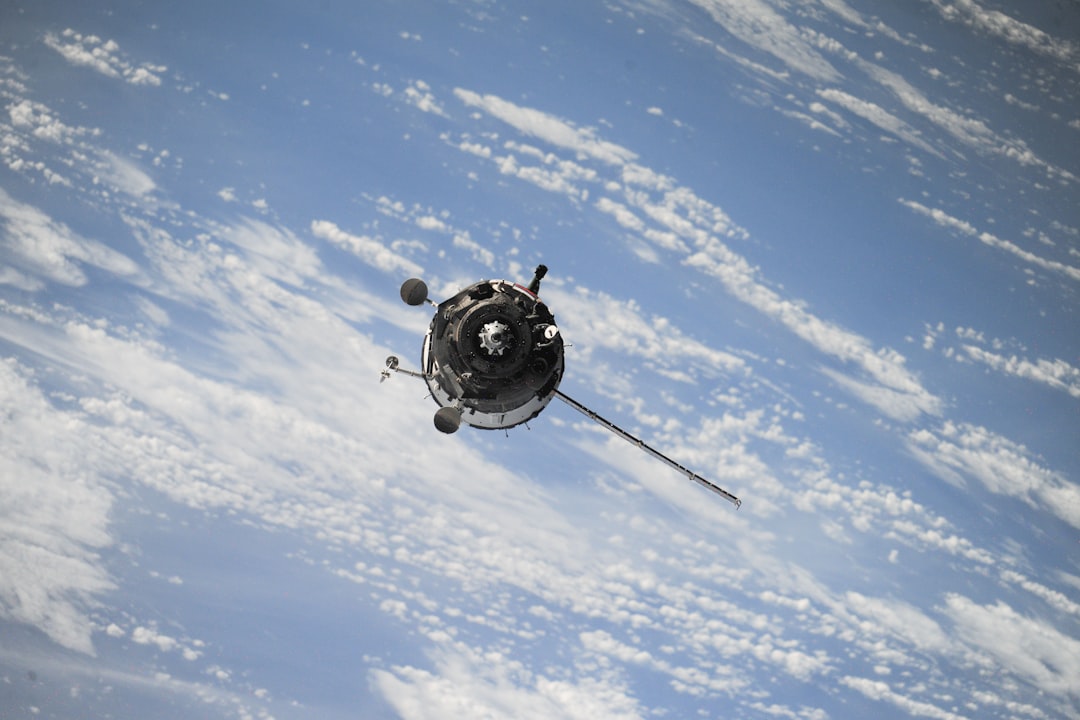
A Fireball in the Outback
The truth is, the blazing fireball that tore across the Australian outback on a quiet night in 2010 was a spacecraft that had been essentially dead for years. It is June 13. A violent streak of light brightens the dark sky over Woomera.
This was the dramatic return of Hayabusa. It was a Japanese space probe sent to do the impossible. Its mission was to land on a near-Earth asteroid named Itokawa, scoop up some dirt, and fly it home.
You have heard of moon landings and Mars rovers. But here is what most people miss about asteroid sampling. Asteroids do not have enough gravity to pull a ship down safely. Landing on one is like trying to dock with a tumbling mountain while moving at bullet speeds.
The Anatomy of a Disaster
Hayabusa arrived at Itokawa in 2005. That is exactly when the nightmare started.
First, the spacecraft’s reaction wheels failed. These are the internal gyroscopes that keep a ship pointed in the right direction. Without them, Hayabusa was spinning blindly out of control.
Then the targeting laser glitched. The probe was forced to navigate purely by guesswork. Do you think a single coding error is bad? Just look at The 125 Million Dollar Space Typo to see how fast things can go wrong in a vacuum.
To get the samples, Hayabusa was supposed to fire a small metal projectile into the asteroid surface. The impact would kick up dust into a collection horn. But the mechanism broke, and the projectile never fired.
Hayabusa actually crashed into the asteroid. It bounced, scraped against the rocky surface, and somehow managed to lift off again. But the violent impact triggered a massive fuel leak.
The leaking fuel froze the battery. Then, the communications system died completely. For seven agonizing weeks, the control room in Japan listened to pure silence. Hayabusa was a ghost ship tumbling through the void.
Waking the Dead
How do you rescue a frozen, silent piece of metal millions of miles away?
Engineers back on Earth refused to give up. They sent blind commands into the darkness, hoping the ship’s backup antenna would catch a faint signal. Miraculously, it did.
The team slowly coaxed Hayabusa back to life. They baked the frozen fuel out of the engine pipes using the heat of the sun. It was a desperate trick that no one had ever tried before.
But wait - if the chemical engines were dead, how could it possibly fly home?
The Japanese team did something brilliant. They rewired the experimental ion engines, combining the broken parts of two different thrusters to make one working engine. It was the ultimate long-distance hack.
It took them five grueling years to limp back to Earth. The journey tested the limits of human patience and robotic endurance. It makes the incredible journey of The Primate Who Beat Humanity to the Stars look like a quick trip around the block.
The Microscopic Treasure
When the capsule finally crashed into the Australian desert, scientists held their breath. Did the sampling mechanism even work during that disastrous crash-landing?
They opened the heat-scarred container in a secure clean room. At first glance, it looked completely empty. The mission seemed like a total failure.
But they put the capsule under an electron microscope. There, glowing against the metal, were 1,500 microscopic grains of alien rock. Hayabusa had actually done it.
Those tiny specks proved that Itokawa was not a solid rock. It was a loose rubble pile held together by incredibly weak gravity. It rewrote the textbooks on the early solar system.
Hayabusa burned up in the atmosphere just to deliver its precious cargo. It fought through failure after failure simply to bring us a thimble of dust.
What else is floating out there in the dark, waiting for a ship brave enough to catch it?