
4,000 Weeks — The Book That Kept Me Up All Night
Oliver Burkeman’s "Four Thousand Weeks" isn't a productivity guide—it's a philosophical dive into our limited time and why you’ll never actually get everything done.
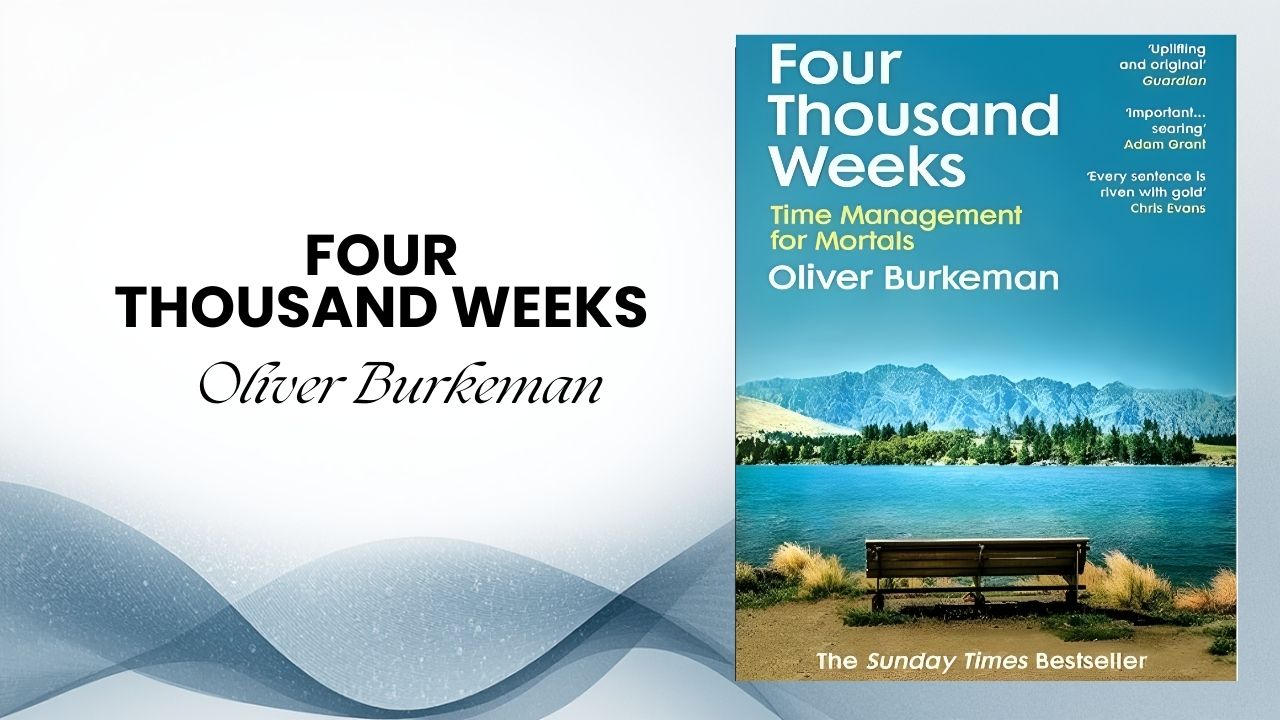
4,000 Weeks — The Book That Kept Me Awake
How many weeks do you have left to live?
If you are 30 years old and live to 80 — you have about 2,600 weeks left. It sounds like a lot. But subtract sleep, work, scrolling on your phone…
Oliver Burkeman’s “Four Thousand Weeks” asks that question on the very first page. And I couldn’t sleep that night.
Video Review
This Is Not a Productivity Book
This is the most important thing to know before reading: “Four Thousand Weeks” doesn’t teach you how to get more done. It does the opposite — it shows you why you can never do everything, and why that’s actually good news.
Oliver Burkeman used to be a productivity geek. He read every book on time management, used every app, and tried every system. Then he realized one thing: all of them were lying to you.
Not intentionally. But they implicitly promise that if you are disciplined enough, you will eventually get everything done. Clear your inbox. Finish your to-do list. And then you can start living.
Burkeman calls this “the efficiency trap.”
What Is The Efficiency Trap?
The truth is, you will never finish everything. Not because you’re not good enough. But because life isn’t designed that way.
Every time you finish one task, three more appear. An empty inbox only invites people to email you more. When you speed up, expectations rise accordingly.
And while you are trying to handle everything — the things that truly matter to you are waiting. Waiting forever.
A quote I read four times in the book:
“The problem with trying to make time for everything that feels important is that you definitely never will.” — Oliver Burkeman
If you try to make time for everything that feels important — you definitely never will.
It sounds counterintuitive. But it’s true.
Choosing Consciously — Instead of Just Reacting
Most people don’t actually choose how they spend their time. We just react: doing whatever screams the loudest, is most urgent, or has the nearest deadline. Then we wonder why another year has passed without anything really changing.
The only thing you can do is choose consciously — and accept that you are turning down everything else.
When you choose one thing, you reject another. No system can eliminate that trade-off.
The 5-Project Exercise — What I Did After Reading
After finishing this book, I sat down and wrote out 5 projects — things that, if I could accomplish them in my life, would make me feel my life was meaningful.
Burkeman says: pick 3 to work on first. As for the other 2 — put them away. Not discarded. Put away. And you aren’t allowed to work on them until the first 3 are done.
It sounds ruthless. But it’s the only way to avoid having everything “in progress” yet nothing finished.
The Question the Book Leaves You With
You only have 4,000 weeks. Maybe fewer. The question isn’t how to do more. The question is: what is worthy of being in those 4,000 weeks?
If you are feeling busy yet empty — this book won’t “fix” you. But it will help you see why you’re feeling that way.
That is the starting point.
Buy the Book
Link to buy the book (Shopee): https://s.shopee.vn/2g6OraZWzt
English version — not too hard to read; Burkeman’s writing style is very approachable.
Thumbnail
Dark background (black or navy). Large text: 4,000 WEEKS, bold font, white or yellow. Small line below: How will you spend them? No face photo. Bottom right corner: small book cover image.