
Whose Life Are You Really Living?
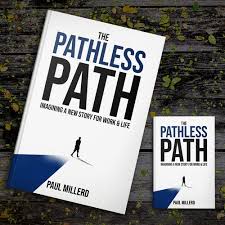
Paul Millerd’s The Pathless Path doesn’t just teach you to quit your job. It asks: Did you truly choose your path, or did the path choose you?
Whose Path Are You Living?
I have a question.
If you quit your job today — not because you were fired, but because you chose to — what would you do next?
Most people would say: “I’ll find a better job.”
But the book I read this week asks a different question: Why do you assume you need to find the next job?
Video Review
What Is This Book?
“The Pathless Path” by Paul Millerd. Published in 2022. It doesn’t have a Vietnamese title yet. It’s little known in Vietnam — but within the community of people questioning the meaning of work in the US and Europe, it’s being read a lot.
Millerd used to work at McKinsey & Company and BCG — some of the most prestigious consulting firms in the world. He’s an MIT graduate (MBA + M.S. Systems Engineering). High salary. Reputation. A clear career trajectory.
In 2017, he quit. Not because he had another plan.
I’m not sharing this book because it teaches you how to quit your job. I’m sharing it because it gives a name to a feeling many of us are having — but have never heard anyone speak out loud.
What Is the Default Path?
Millerd realized he was living according to a “default path” — the preset route most of us are taught from childhood without ever being asked if we actually want it.
Study hard → get into a good school → work for a good company → get promoted → retire → then what?
It’s not bad. It’s just: you never chose it. It chose you.
And the most remarkable thing in this book isn’t that Millerd quit. It’s what he discovered after quitting: he didn’t know what he wanted.
Not because he lacked ability or didn’t have dreams. But because for the first 30 years of his life, he never needed to ask himself that question. The path was already laid out. He describes that phase as “horrible and liberating at the same time.”
That is why the book is titled “The Pathless Path” — a journey without a pre-beaten trail.
Want — or Just Afraid of Not Having?
Millerd doesn’t say “quitting is right” or “freelancing is happiness.” He is much more clear-eyed than that.
He says that most people don’t know the difference between wanting something and simply being afraid of not having it.
- Do you want a promotion — or are you afraid of not being promoted, afraid of being judged by others?
- Do you want to do this project — or do you just not dare to say no?
- Do you want to work for this company — or do you only feel safe having their name on your LinkedIn?
This is a hard question. Harder than any question on any exam you’ve ever taken.
“Work as a Gift” — A Perspective That Made Me Re-read Three Times
Millerd writes about the concept of “work as a gift.” Not in a sentimental sense. But in the sense that: when you do something because you truly want to contribute — not for the salary, not because of coercion — its quality is entirely different. And the feeling of doing it is entirely different.
He’s not saying you don’t need money. He’s saying you should find a way for what you want to do and what the world is willing to pay you for to — gradually — meet.
It’s not instant. It’s not easy. But it’s a destination more worth aiming for than the peak of a path someone else drew for you.
This Book Is For You If…
- You are doing well “on paper” but feel something is missing.
- You are thinking about making a change — but don’t know what to change into yet.
- You want to understand why “follow your passion” sounds great but is actually hard to execute.
If you are completely satisfied with your current path — don’t read it. It will make you unnecessarily restless.
A Question to Leave You With
If your salary remained exactly the same — what would you change about your daily work?
There is no right or wrong answer. But if you don’t know the answer — that in itself is an important piece of information about yourself.
Same topic, but easier to start with: Essentialism — Greg McKeown