
The 54cm Mistake That Broke a Bridge
Discover how a simple math error involving two different oceans caused a massive international bridge to miss its mark completely.
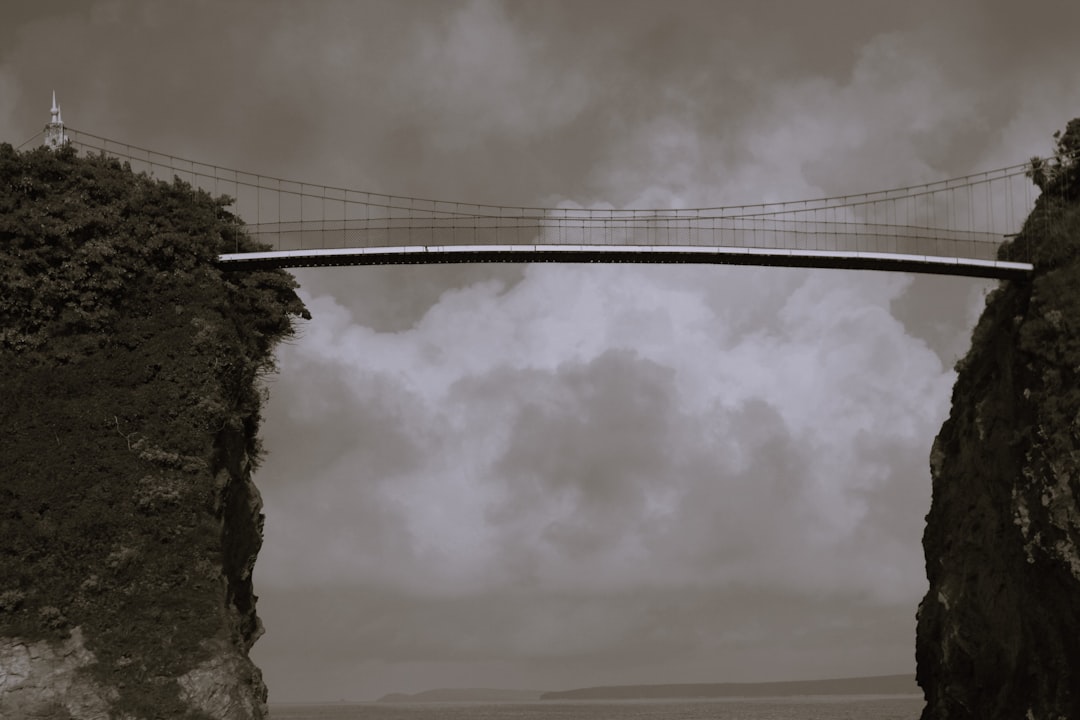
A Tale of Two Oceans
What most people don’t know about the Hochrhein Bridge is that its two sides were built using entirely different oceans. You would expect two advanced nations building a joint infrastructure project to agree on where the ground actually is. But in 2003, Germany and Switzerland found out the hard way that “sea level” is not a universal truth.
When the construction crews finally met in the middle of the Rhine river, their concrete masterpiece refused to line up. The German side was sitting exactly 54 centimeters higher than the Swiss side.
How does a highly precise engineering project end in such an embarrassing physical mismatch?
The answer lies in how countries measure the Earth itself. Every nation needs a baseline for zero elevation to plan their roads and buildings.
Germany bases its zero elevation on the North Sea level measured at Amsterdam. Switzerland is completely landlocked and separated by the Alps. They use the Mediterranean Sea level measured far away at Marseille.
Because the oceans are not perfectly flat and the Earth is a bumpy sphere, these two reference points are not identical. The Mediterranean baseline is exactly 27 centimeters lower than the North Sea baseline.
Both teams of engineers knew this fact. They had the blueprints, they had the exact topographic measurements, and they even had the 27-centimeter difference written right into the core project plans.
The Math That Went Backwards
So why did they miss the connection so badly? The culprit was a single keystroke.
Someone in the calculation department made a fatal error with a simple plus and minus sign. Instead of subtracting 27 centimeters to make the two sides equal, they added 27 centimeters to the German side.
They doubled the error overnight. The expected 27-centimeter adjustment became a glaring 54-centimeter wall of solid concrete dividing the two nations.
Think about that for a second. Have you ever made a tiny typo that ruined your afternoon? Now imagine that typo is cast in thousands of tons of steel and stone suspended above a rushing river.
The Cost of a Plus Sign
This kind of catastrophic oversight is surprisingly common when complex systems collide. It reminds you of The Hidden Flaw Inside Clone 277, where a tiny overlooked detail cascaded into a massive failure. Or even the time The 14-Inch Drill That Swallowed A Lake proved that a few inches of miscalculation can literally reshape local geography.
The bridge builders were forced to halt everything immediately. They had to physically lower the German side of the structure to meet the Swiss side.
This required custom hydraulic presses, frantic late-night re-engineering, and carefully grinding down the completed concrete pillars. The exact financial cost of this 54-centimeter blunder was kept quiet by the embarrassed contractors. But you can easily guess it was not a cheap fix.
The Illusion of Certainty
We walk around assuming the ground beneath our feet is a fixed, objective reality. We trust the numbers on our screens and the maps guiding our phones without a second thought.
But wait - if two of the most technically advanced countries in the world cannot even agree on where sea level is, what else are we measuring wrong?
The Hochrhein Bridge eventually opened to traffic in 2004. Today, thousands of cars drive over that invisible seam where two different versions of the Earth were forced to compromise.
The next time you cross a border, look down at the pavement. Are you stepping onto the same ground, or just driving over a very expensive mathematical correction?