
The 75-Cent Rubber Ring That Killed a Spaceship
Discover how a cheap piece of hardware and ignored warnings caused one of the most tragic disasters in spaceflight history.
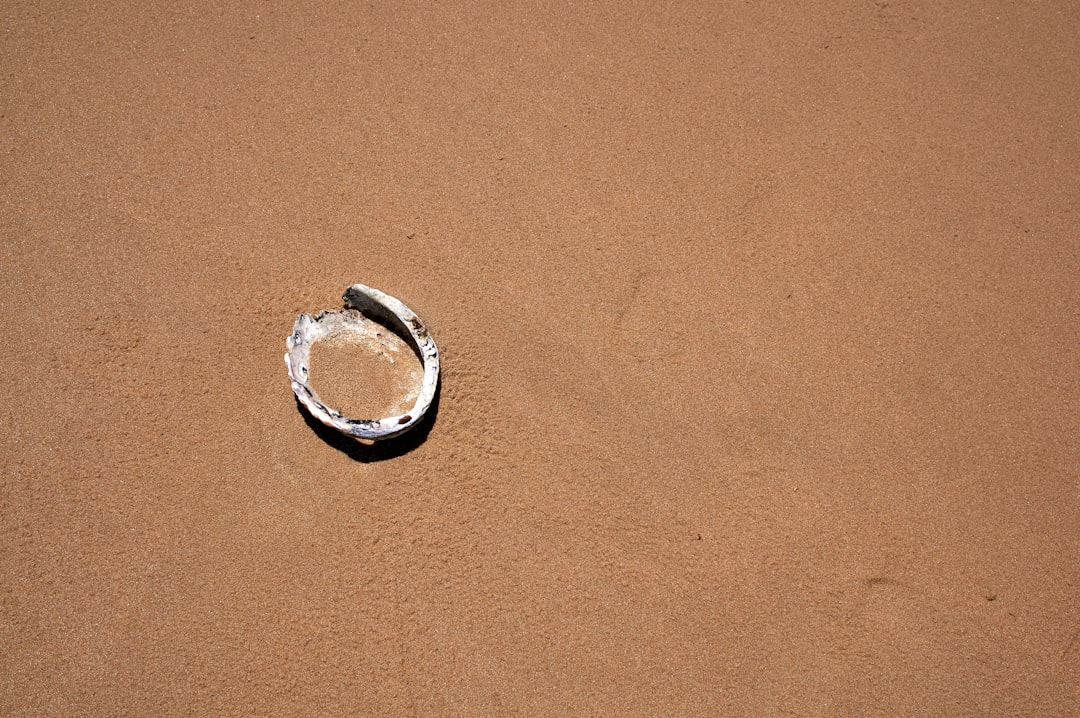
Actually, the most destructive force in the history of human spaceflight was not a massive explosion of rocket fuel or a catastrophic computer failure. It was a simple rubber ring that cost just 75 cents.
Honestly, I had to re-read the engineering reports three times before I believed it. How could a piece of hardware cheaper than a candy bar bring down a spacecraft worth billions?
You’ve heard of the Space Shuttle Challenger disaster. But here is what most people miss about that tragic day in 1986. The entire catastrophe came down to a tiny component known as an O-ring.
The Mechanics of Disaster
The solid rocket boosters on the space shuttle were massive pieces of engineering. They were built in individual segments and shipped by train from Utah to Florida. When assembled at the launch site, the joints between these huge steel sections needed to be completely sealed against the intense pressure of launch.
That is exactly where the O-rings came in. These circular strips of synthetic rubber were exactly 0.28 inches thick. Their sole job was to expand against the metal walls and trap the violently burning rocket exhaust inside the booster casing.
Under normal conditions, this simple design worked flawlessly. The extreme pressure of the rocket ignition would push the rubber flat against the gap, creating a perfect seal. But January 28 was far from a normal day.
A Freezing Morning
The night before the launch, the temperature at Cape Canaveral plummeted. It dropped to exactly minus 2.2 degrees Celsius on the launch pad. This was completely unprecedented for a shuttle mission.
Engineers at the company that built the boosters were terrified. They knew that rubber loses its elasticity in freezing weather. If the O-ring was stiff, it would not expand fast enough to seal the metal joint.
They pleaded with NASA managers to delay the flight. They warned that launching in those freezing conditions would result in a fatal failure. Sadly, their desperate warnings fell on deaf ears.
It is a chilling reminder of how institutional blindness happens. Much like the story of A $125M Math Error Hidden in Plain Sight, the raw data was readily available. The experts knew the exact risks, yet the bureaucracy pushed forward anyway.
The Fatal 73 Seconds
When Challenger lifted off, the frozen O-ring failed immediately. It was simply too cold to expand. A tiny gap remained open for just a fraction of a second, but that was all it took.
Superheated gas instantly vaporized the rubber. It began spraying out of the side of the booster like a blowtorch. This invisible flame slowly burned through the struts attaching the booster to the massive external fuel tank.
At 73 seconds into the flight, the strut gave way. The booster pivoted and crushed the fuel tank. The resulting aerodynamic forces tore the shuttle apart in the sky.
The Chilling Truth
The investigation that followed uncovered deep flaws in management. Renowned physicist Richard Feynman famously demonstrated the O-ring failure on live television. He simply dropped a piece of the rubber into a glass of ice water and showed how stiff it became.
It was a brutal, visual proof of human error. It showed that engineering disasters rarely happen because of unknown physics. We see this pattern often in aviation history, much like Why the Concorde Really Vanished, where known design flaws are tolerated until tragedy strikes.
The Challenger disaster changed spaceflight forever. It forced engineers to rethink everything from booster design to reporting structures. But the core lesson remains deeply unsettling.
We can build the most advanced flying machines in the universe. We can control millions of pounds of thrust. But what happens when our ambition outpaces our willingness to listen to a simple 75-cent piece of rubber?